
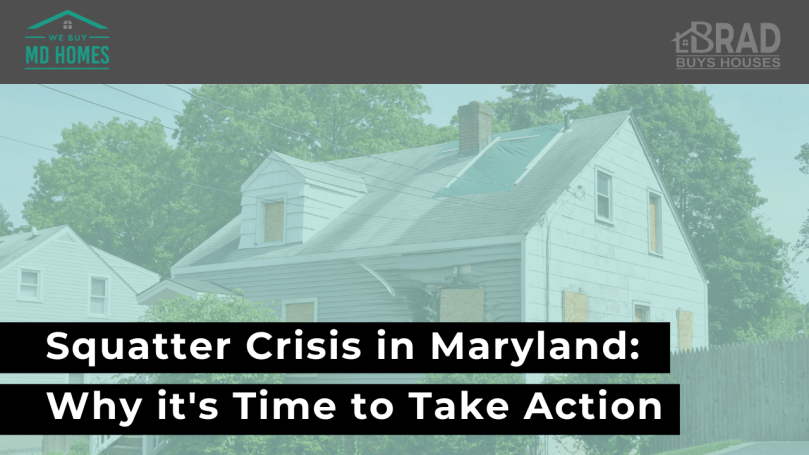
Squatters in Maryland: The Growing Crisis Facing Homeowners and Investors
Why It’s Time to Take a Hardline on Maryland Squatters
Squatters are no longer just a nuisance—they’re a systemic threat to Maryland’s real estate market. For homeowners, investors, and property professionals, the growing wave of unlawful occupancy is more than an inconvenience: it’s a legal and financial nightmare with few clear solutions.
As someone who’s been buying and selling homes across Maryland for years, I’ve seen firsthand how the law has failed to keep up with the evolving tactics of those taking advantage of vacant properties—and how this affects communities, neighborhoods, and everyday people just trying to sell or maintain their homes. The long and short of it is that squatters are a nightmare.
What’s Driving the Rise in Squatting Across Maryland?
Social Media & the Rise of Squatter Networks in Maryland
One of the most disturbing developments is how squatting has become commercialized. Ads on platforms like Instagram, Facebook and Craigslist now openly promote “squatter homes,” offering keys and phony leases to unsuspecting people for thousands in cash. These posts are often disguised as affordable housing options—when in reality, they’re scams that set up conflict between the rightful owner and the occupant. I counted no less than ten “fake” ads for rent on Facebook in one real estate investor group.
Vacant Maryland Properties = Easy Targets
Vacant homes under renovation or pending sale are prime targets. In one recent case in Windsor Mill, squatters moved in the morning of closing with a full moving truck. The homeowner was forced to negotiate a $3,000 “cash for keys” payment just to get them out—losing time, money, and trust in the process.
No Real Consequences
The reason this behavior persists? Squatters know that Maryland’s laws make it nearly impossible to remove them quickly. These folks are “professionals” and they are experts at gaming the system. Squatters are just randomly taking over properties, they are calculating and know how to exploit all legal loopholes. Sadly, law enforcement typically treats squatting as a civil matter. Even if the lease is obviously fake, you’ll likely be told, “Take it to court.”
The Legal Gap: How Maryland Law Is Falling Short When it Comes to Squatting
Fake Leases, Real Problems for Maryland Homeowners and Investors
Under Maryland law, even fraudulent leases can be enough to stop police from acting. Once someone is inside a home and claims tenancy—even with obviously doctored documents—it becomes a civil issue. That means weeks, sometimes months, of legal proceedings before you can regain control of your property.
Eviction Reforms Aren’t Enough
While a new law is being considered to shorten eviction timelines from months to around 45–60 days, it’s only a partial fix. It doesn’t address how these situations are created, and it certainly doesn’t give property owners the immediate protection they need when someone is living in their house illegally. The bottom line is that Maryland is already a tenant friendly state compared to the rest of the country and new legislation on squatters is going to be a complicated undertaking.
No Accountability for Enablers
What’s even more alarming is the lack of regulation for platforms like Meta and Google, which are hosting ads and groups that promote squatting openly. There’s no social media or internet safeguards in place to discourage or penalize these perpetrators. A local Baltimore attorney has filed suit against these companies for facilitating fraud—but meaningful change has yet to happen. And even if change does happen, the process will likely be long and drawn out.
The Real Impact to Marylanders: More Than Just Property Loss
This isn’t just a property issue—it’s an economic one.
- For investors, it can derail sales and force expensive legal remedies.
- For homeowners, it introduces trauma, fear, and loss of equity.
- For communities, it means more blighted houses, criminal activity, and instability.
Every squatter who occupies a home illegally is delaying someone else’s plans—whether it’s moving, selling, retiring, or just maintaining a safe block. Even worse, the issue of squatters isn’t just impacting the community on a local, state and regional level – it’s a nationwide issues bordering on epidemic proportions.
What Maryland Needs: Real Solutions to Deter Squatters, Now
As someone who’s been in this industry for years, I believe this issue needs to be elevated to the top of the legislative agenda. The current laws aren’t working—and unless we address this as both a legal and societal problem, the damage will only grow.
Here are three ways Maryland can turn the tide:
1. Pass Criminal Trespassing Reform for Fraudulent Tenancy Claims
The state needs to clearly distinguish between legitimate tenants and bad-faith squatters who use fake leases to occupy homes. This includes:
- Empowering law enforcement to remove individuals with forged or non-verifiable lease documents.
- Creating a criminal statute for knowingly presenting fraudulent tenancy claims.
- Fast-tracking cases where clear title and fraudulent leases collide.
2. Launch a Statewide Task Force on Property Fraud and Unauthorized Occupancy
Modeled after successful housing enforcement units in other states, this task force could:
- Coordinate between housing departments, sheriffs, and local code enforcement.
- Provide property owners with legal and security resources.
- Investigate organized groups promoting squatting schemes online.
This would also be a channel to collect and analyze data—because what’s happening in Baltimore City is spreading fast into counties like Prince George’s, Anne Arundel, and Montgomery.
3. Create a Private/Public Coalition for Housing Integrity
Government alone can’t solve this. We need a coalition of:
- Investors and property owners sharing intelligence and patterns.
- Tech companies committing to remove “squatter housing” ads.
- Legal and law enforcement professionals creating a model for quick, legal intervention.
Community associations, neighborhood groups, and advocacy organizations can also play a key role. By working together, we can raise awareness, support homeowners, and cut off the market for these illegal occupations before they start.
Final Thoughts: The Cost of Inaction Is Too High
Squatters in Maryland don’t just steal homes—they steal peace of mind, economic opportunity, and trust in our systems.
As a Maryland investor and housing professional, I believe the state has a responsibility to act and act immediately. Real estate is one of the pillars of Maryland’s economy. If we allow these fraudulent squatter networks to thrive unchecked, we risk driving investors out, discouraging development, and eroding communities from the inside out.
It’s time for stronger laws, smarter enforcement, and meaningful collaboration. If you’re a homeowner, investor, policymaker, or community leader—join the fight.
Let’s make Maryland safe for property owners again.
 Housing Journey